Nature Heros
App design
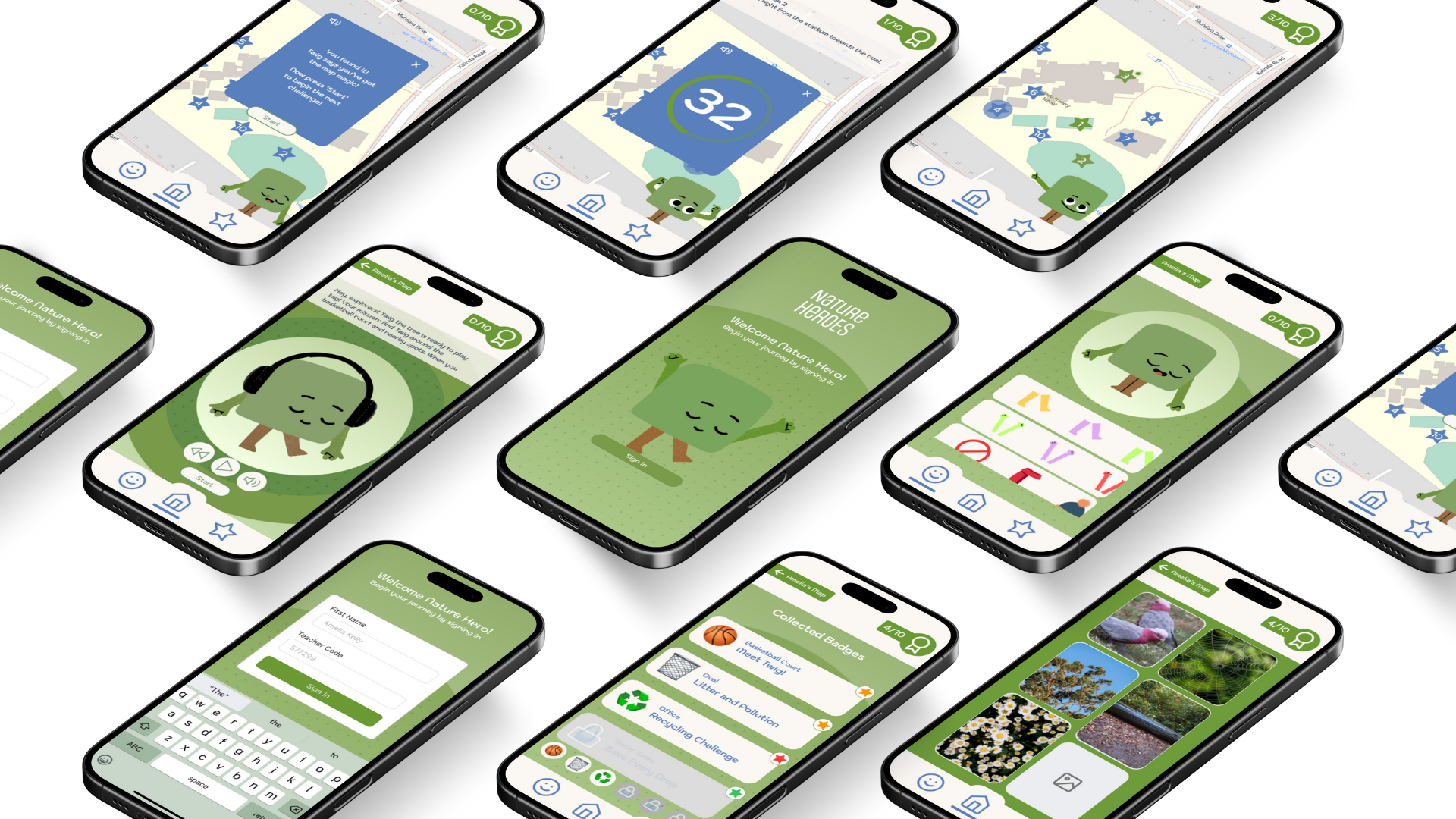
the Scope.
The aim of this project was to build a geolocated narrative delivered through a mobile phone application. The app needs to situate on a map, 10 locations within a 25 kilometre radius. The app also needed to include mobile camera data, audio data to mimic how the app would work if it went to full production.
-
To effectively create a geolocation app that is engaging and fun to use for the target user, many rounds of focus group testing and field testing was conducted. From this feedback from direct and indirect target users, the Nature Hero app was able to be developed to meet the desires of the user.
-
It was important to have an authentic and true reflection of the target user in a focus group, but it was equally essential to incorporate diversity in the discussions and perspectives.
In the first round of testing, participants reflected on their personal experiences with geolocation apps by sharing likes, dislikes, and visualising an app interface to identify necessary features and pain points. They then drew a mascot to guide the journey, informing narrative and engagement design, and ranked learning styles to shape interaction choices and tasks.
The second and third round of testing included a field test at the school, and another focus group for further refinements. The main pain points and suggestions from these tests were:
Initial Focus group
Users valued convenience, interactivity, and personalisation in map-based experiences.
Audio guidance, clear cues, and simple, colourful controls were strongly preferred.
Pain points included unreliable location tracking and accuracy issues.
App user testing
Users often tried tapping the “Amelia’s Map” label instead of the home button, showing a need for more intuitive navigation and clearer consistency standards.
Interactive tasks, especially the photo activity, were the most engaging, and users enjoyed earning and viewing their badge collections.
Pain points included unclear next steps, lack of visual guidance, confusing text instructions, small buttons, glitches, and an unrelatable mascot voice.
-
The goals for this project was to design an app that empowered kids in different learning styles to engage in a deeply interactive and digitally intertwined learning experience that encourages empathy and passion for environmental sustainability. 3 goals were created, related to how the user should feel when interacting with the app:
Confident and in control
Engaged and curious
Connected and supported
-
The final deliverable for this project was a fully functioning prototype of the app. Pages included a homepage with the map of tasks, a badge collection page where users could check their progress in the journey and see what they had left to achieve, and a mascot customisation interface that allowed users to customise their character for the journey.